![mercury-tower-thailand_20.jpg]()
A flexible workspace Bangkok decision rarely starts with the workspace. It starts with the team. A ten-person hybrid team where three people work from home most days, four come in three days a week, and three are on the road across the region looks nothing like a traditional headcount of ten. Trying to lease office space for that team using last decade's rules ends in either oversized fixed cost or undersized capacity on the days everyone shows up. Bangkok's flex office market has grown to solve exactly this kind of mismatch, and the city now offers a wider range of formats than most Asian capitals. The harder question is which format suits which team. That is what this guide is about.
What Flexible Workspace Actually Covers in Bangkok
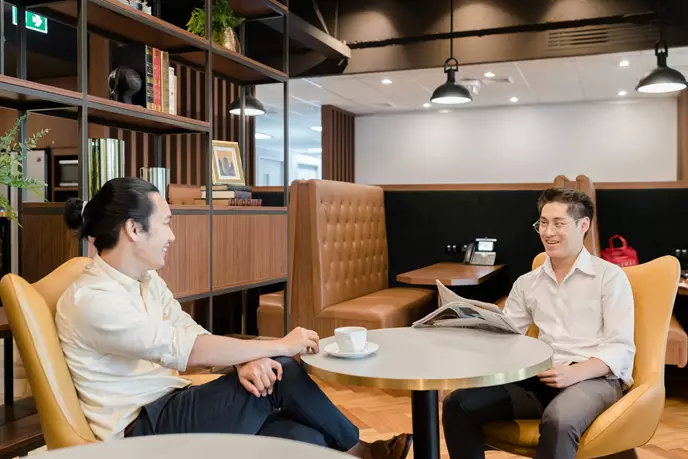
The flexible category is broader than coworking. Across Thailand and especially in Bangkok the term covers five overlapping categories: hot desks (any-seat access in a shared area), dedicated desks (a fixed seat with lockable storage), private offices (lockable rooms for two to twenty people), meeting rooms (booked by the hour or day for client work and team gatherings), and virtual offices (a business address with mail and call handling but no daily desk).
The five categories are usually offered by the same operators from the same buildings, which means a team can mix formats and scale between them without changing providers. A hybrid team might start with three dedicated desks in a Bangkok coworking space and an on-demand meeting room allowance, then upgrade to a small private office as headcount grows, then add a virtual office at a second Bangkok address for clients in a different district. That portability is part of why the flex model has become the default rather than the alternative for Bangkok teams under twenty.
How Hybrid Patterns Drive the Format Choice
The format decision tracks the working pattern rather than the headcount. Five common Bangkok hybrid patterns each suit a different mix.
Solo Remote Workers in Town for Part of the Week
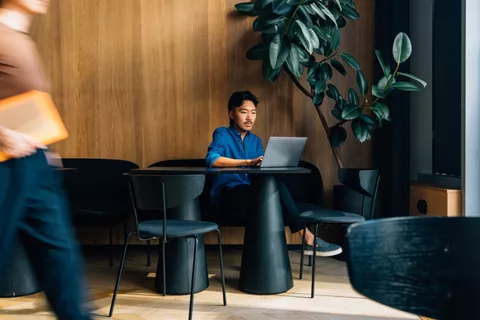
A salesperson, consultant, or freelancer who comes into a Bangkok base two or three days a week to take meetings and use a quieter workspace usually needs a hot desk plus meeting room credits. Monthly hot desk plans typically run 3,000 to 6,500 baht in Bangkok, depending on tier, with on-demand meeting room time charged separately or included up to a few hours.
Hybrid Regulars with a Fixed Office Routine
A staff member who comes in three or four days a week, every week, benefits more from a dedicated desk than a hot desk. The 2,000 to 4,000 baht monthly upgrade over a hot desk buys a fixed seat, a locker, the ability to leave equipment overnight, and a meaningfully better experience for the hybrid worker who relies on the same setup.
Small Teams Splitting In-Office and Remote
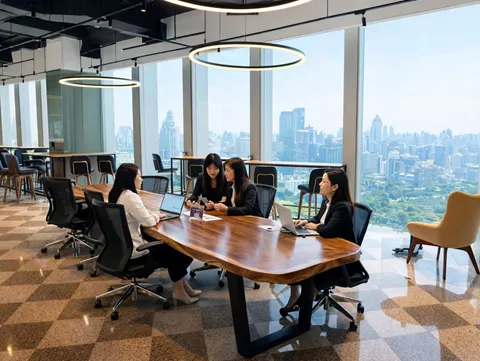
A team of five to ten, where roughly half is in the office on any given day, typically uses a small private office of three to six desks plus on-demand meeting rooms for full-team gatherings. The private office covers the average occupancy, while the meeting rooms cover the peaks.
Distributed Teams Gathering for Periodic Sessions
A team whose members live across cities or regions and only meet in Bangkok monthly or quarterly often needs no fixed desks at all. A virtual office address plus a booked meeting room for each gathering covers the requirement at a fraction of the full-time space cost. The same provider can host the team's mail handling and dedicated phone line.
Travelling Staff Across the Asia-Pacific Region
A team with staff who move between Bangkok, Singapore, Manila, Tokyo and other regional cities benefits from a flexible workspace provider with multi-location access through a global network. The same membership lets travelling staff work from partner centres in other cities without paying day-pass rates or hunting for cafe wifi.
Where Bangkok Concentrates Its Flex Office Supply
Bangkok's hybrid workspace supply clusters along the BTS line, with three main concentrations.
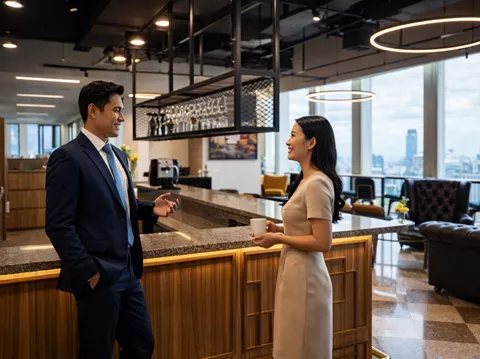
The CBD axis around Wireless Road, Phloen Chit, Chidlom and Ratchadamri carries the largest concentration of premium and mid-tier flex centres. Buildings on this axis serve professional services, finance, and consulting teams. BTS access at Phloen Chit, Chidlom and Sala Daeng makes the axis reachable from anywhere on the BTS network within twenty minutes.
The Silom and Sathorn extension runs south from the CBD axis. Grade A towers on Silom Road and Sathorn host serviced office operators alongside coworking floors. The mix is similar to the CBD axis with slightly lower price tiers in some buildings.
The Sukhumvit corridor between Asoke and On Nut concentrates the community-tier and boutique end of the flexible workspace market. Centres along this corridor lean toward creative, tech and small lifestyle businesses, with stronger community programming and a slightly more relaxed environment.
A growing fourth concentration sits in Rama IV and the newer mixed-use developments around Wireless Road, where premium flex operators have opened large floor-plate centres in recent buildings. This is where most of the high-end hybrid team supply has been added recently. For a curated comparison of buildings across these CBD clusters, see the top coworking spaces in Bangkok for 2026.
The Cost Math vs Traditional Lease
The financial case for a Bangkok flexible office decision becomes obvious once the math is broken down. A traditional 200-square-metre lease in a Grade A CBD tower typically costs 200,000 to 300,000 baht per month plus fitout (often 1.5 to 2.5 million baht), plus a three-year commitment, plus monthly utilities and management fees.
The same capacity in flex office Bangkok format runs roughly half to two-thirds the monthly cost with no fitout, no multi-year commitment, and utilities included. For a team that might grow from ten to fifteen or shrink to seven over the next two years, the optionality alone is worth more than the headline price. Capital that would have gone into desks and walls stays in the operating account.
The break-even point for a hybrid team typically sits between fifteen and twenty-five staff, depending on attendance pattern. Below that, flexible workspace almost always wins. Above that, the decision shifts depending on how predictable the headcount is.
For hybrid teams that need a CBD address with the full flex portfolio in one place, flexible workspace in Bangkok operated through Servcorp covers Dusit Central Park, The Offices at CentralWorld, Park Ventures Ecoplex and Mercury Tower with hot desks from 3,000 THB per month, dedicated desks from 5,000 THB, private offices, virtual offices and meeting rooms on demand. The model suits hybrid teams whose staff want a credible CBD address, in-house IT support, and access to a 150-location global network for travelling members.
Operational Realities for Managers of Hybrid Teams
The operational side of flexible workspace matters more for managers than the headline plan. A few practical points.
Booking apps now run most major flex operators. A hybrid manager can see which staff have booked desks and meeting rooms on any given day, set caps per person, and avoid double-booked rooms. The apps usually integrate with calendar systems and allow guest passes for clients visiting the office.
IT support is bundled into the plan at premium-tier operators, which means hybrid managers do not need to keep an in-house IT person on retainer. Bilingual receptionists handle guest welcome and call routing without extra cost. Mail handling, including scanning to email, eliminates the need for someone to be physically present to receive correspondence.
Multi-location access through global flex networks means a travelling staff member can drop into a partner centre in Singapore, Tokyo, Manila or fifty other cities without paying day-pass rates. For Bangkok teams with regional staff, this benefit alone often justifies the membership.
The day-to-day reality is that a well-chosen flexible workspace removes most of the operational tasks a small business owner used to absorb personally. The freed-up time goes back into the actual business. For a side-by-side breakdown of how SMEs combine these formats in practice, see how Bangkok SMEs choose between virtual offices, hot desks and serviced offices.
Final Thoughts
Bangkok's flex office market has matured to the point where the hybrid team question is no longer whether to use flexible office solutions in Bangkok, but which combination of formats matches the working pattern. The format decision tracks attendance and headcount fluctuation more than absolute team size. A ten-person team where everyone shows up four days a week buys a very different space than a ten-person team with three permanent in-office staff and seven part-timers, even though the headcount is identical.
The teams that get this right tend to map their actual working pattern (how many people are in the office on a typical day, what surge capacity is needed, what travel patterns exist) before they go shopping. The teams that get it wrong almost always over-buy fixed capacity. In a city where flex supply has caught up with demand, paying for empty desks is an avoidable mistake.
Frequently Asked Questions: